Cartier
Prive Tortue
Price on request
- Sold
- Brand New
- Box & Papers
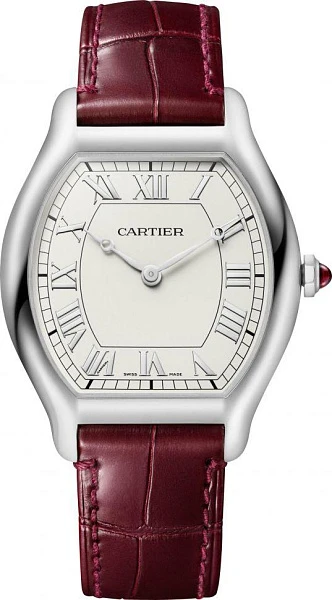
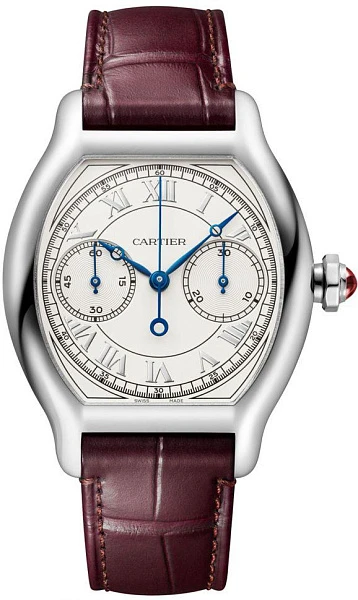
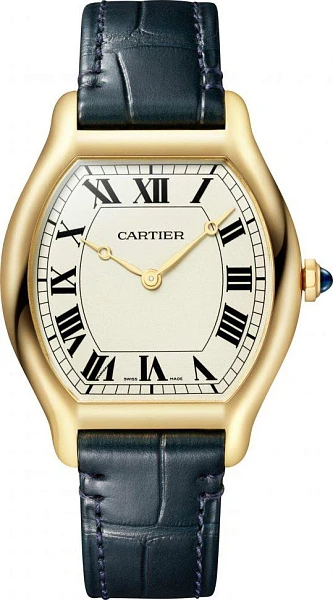
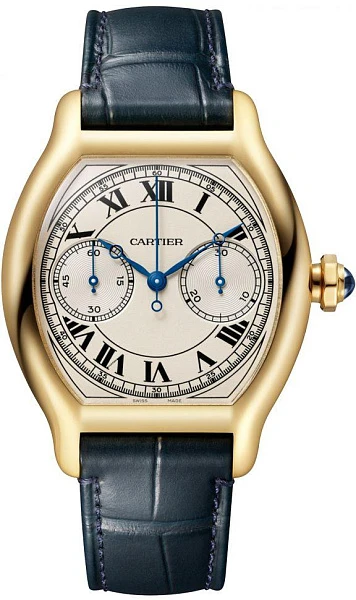
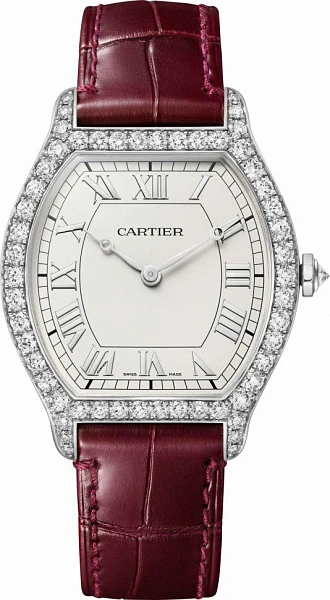
Tortue is one of Cartier's earliest shaped cases: Louis Cartier drew the tortoise-shell case in 1912, even before the Tank, and it gave the line its name. The sides widen smoothly towards the centre, the lugs are elongated and curved, and the caseback follows the wrist — so the watch sits close and slips completely under a shirt cuff.
The design of the Cartier Tortue is recognisable and barely changes from model to model: a guilloché dial, a ‘railway’ minute track around the edge, Roman numerals and blued steel hands, which get their blue colour from heating the metal, not from paint. The crown is topped with a cabochon: a blue sapphire in classic versions, a diamond in jewellery versions with a diamond-set case.
The line has two distinct stories. The first is the Tortue Monopoussoir single-pusher chronograph: start, stop and reset are all operated through the crown, leaving the side of the case clean. The house made such a chronograph in 1928, revived it in 1998, and in 2024 reissued it in the Cartier Privé collector series, in yellow gold and platinum, with the shaped calibre 1928 MC and a 34.8 mm case. The second is the house's current line: the case shape is unchanged, and models differ in size, metal and movement. It is easiest to choose in this order: case size first, then metal and movement, and only then gem-setting — diamonds are pavé-set on the bezel and lugs and turn the watch into a piece of jewellery.
One example is the Tortue White Gold Diamond: white gold, diamonds on the bezel and case, a silvered guilloché dial, an ultra-thin hand-wound calibre and an alligator leather strap.
If this shape is not for you, the house's other lines include Tank, Santos de Cartier, Baignoire, Ballon Bleu and Panthère de Cartier, as well as High Jewelry.
Comments appear on the site after moderation
We will get back to you as soon as possible